

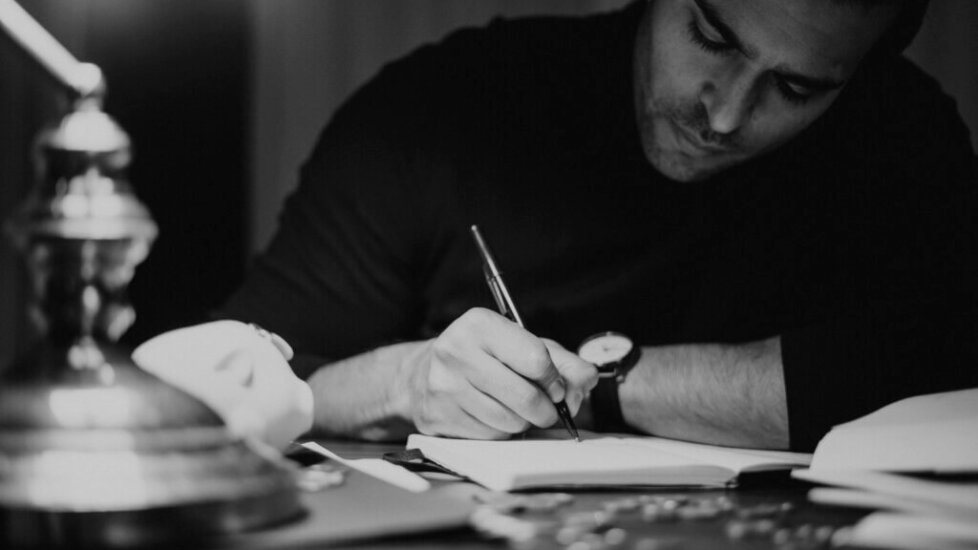
Confession: I don’t write daily. I don’t read daily either. I do occasionally consider abandoning my second novel manuscript. And I have been known to put down a book without ever reading to the end. Yet, I consider myself both a writer and a reader.
There’s lots of advice out there about how to be a writer. All of it’s good. For someone. But is all of it good for you? I often feel like a literary less-than because I don’t follow all the “good” writing advice out there. But I’m learning to differentiate between good advice and advice that’s good for me.
Write every day.
Even if it’s just for 15 minutes. Even if it’s crap. Even if it means getting up at 4:30 in the morning.
I love a structured routine, and I wish daily writing fit into mine. But it doesn’t. In my current season, writing every day is an out-of-reach luxury. Besides, sometimes not writing is writing. When I’m not writing, I’m gathering material, collecting lived experiences, reading, researching, thinking, and being still. All of these activities support my writing. Besides, in what other activity is it advisable to never, ever step away? To never, ever take a break? Back when I ran half-marathons regularly, I didn’t run every single day. Some days were for cross-training. Some days were even for rest. I like to think of my not-writing days as cross-training.
If you want to try writing every day, I applaud and, honestly, envy you – but give yourself some grace if you miss a day every now and then. You’re still a writer. You’ll get back to it tomorrow. Or the next day.
Establish and employ a writing ritual.
Cue your mind and body into the fact that now is the time to write. Light your favorite candle. Prepare your signature writing drink. Turn on that writerly soundtrack. Eliminate all distractions. Go to your writing space, which should be the same spot every time because–I don’t know – that triggers your muse.
If I’m being honest, I love this advice, and I wish I could take it, but it’s just not realistic for my already-up-before-5am-anyway, working-full-time, freelance-writing-on-the-side, dog-and-parrot-mom lifestyle.
If I invested time in this process, I’d write even more infrequently and for even less time than I already do. I have to prioritize the actual writing. The time I would spend setting up my ritual each writing session, I devote to the writing. The time I would’ve spent hunting for a lighter for that candle, I spend writing (besides, candles aren’t good for Archie the rescue parrot). The time it would take me to make that drink, I spent writing. The soundtrack? If I’m on my back deck, it’s birdsong and maybe my neighbor’s weed whacker. If I’m in the living room, it’s Archie’s repertoire of words and sounds and The Littles’ (my dogs) occasional bark. If I’m at the kitchen table, it’s the washing machine or dishwasher.
My writing sessions are piecemeal, migratory, and transitory, often determined by where The Littles settle, what the weather’s doing, when time permits, etc. I like to think of my ritual as…organic.
Don’t wait for the muse to strike.
The muse may never strike. If you wait for inspiration to write, you may never write – so go ahead and at least write some junk you can polish up later. Sometimes, writing is like pulling teeth.
I’m not a dentist. I don’t want to pull teeth. And while this advice holds true if I’m on deadline, if I’m not, why torture myself? Why turn something I love into a slog? I write better and enjoy the process more when I’m inspired, and I want to love the act of writing whenever possible. Besides, I’m pretty much intrinsically compelled to write in some capacity most days of the week, anyway. My muse is a taskmaster. There’s no need for me to usurp her and force the issue.
This is not to say you shouldn’t follow the above nuggets of wisdom; it’s simply to say that each of us has to find what works for us. Writing habits are not one-size-fits-all. When I realize I haven’t been writing enough, I don’t beat myself up over it; I sign up for a workshop or a class. I once went so far as to enroll in a graduate program for creative writing and a year-long novel-writing class to hold myself accountable and provide myself some structure. Both were hugely successful and satisfying endeavors. As for a writing ritual, I always have a full glass of water on hand. And regarding that muse – I welcome her visits when she makes them, and when she doesn’t, well, I don’t write without her unless I’m under duress.
About the Author
 Amanda Sue Creasey is a high school English teacher and the Outdoors Writer for Cooperative Living Magazine. She holds an undergraduate degree in German, English, and Secondary Education from Michigan State University, and a graduate degree in Creative Writing from the University of Denver. Her work appears in three Chicken Soup for the Soul books, and her poetry, outdoor journalism, and nature photography have earned recognition from the Poetry Society of Virginia and the Virginia Outdoor Writers Association. Her debut novel, An Expected End, came out last year. When she isn’t writing, she enjoys hiking, walking, and standup paddleboarding with her dogs, as well as running and reading. A member of James River Writers, the Poetry Society of Virginia, and the Virginia Outdoor Writers Association, she resides in Chester, Virginia, with her husband; Archie the rescue parrot; and two rescue dogs, Nacho and Soda, chihuahua mix littermates who rule the house. Find Amanda on Instagram at @Amanda_Sue_Creasey, substack at AmandaSue Creasey.substack.com, or on her website, AmandaSueCreasey.com.
 Kris Spisak wrote her first three books—Get a Grip on Your Grammar, The Novel Editing Workbook, and The Family Story Workbook—to help writers of all kinds sharpen their storytelling and empower their communications. Her award-winning debut novel, The Baba Yaga Mask, was inspired by her family’s experience in the post-WWII Ukrainian diaspora, and her fifth book, Becoming Baba Yaga: Trickster, Feminist, and Witch of the Woods, explores the complex origins of this Slavic folktale character.
 Kristi Tuck Austin helps authors increase their books’ discoverability, build their platforms, and turn new readers into loyal fans. She’s also worked in TV development for America’s Next Great Author, Can Do Entertainment, and Gum Street Productions. She’s completing a certificate in Film and TV Development from UCLAx.